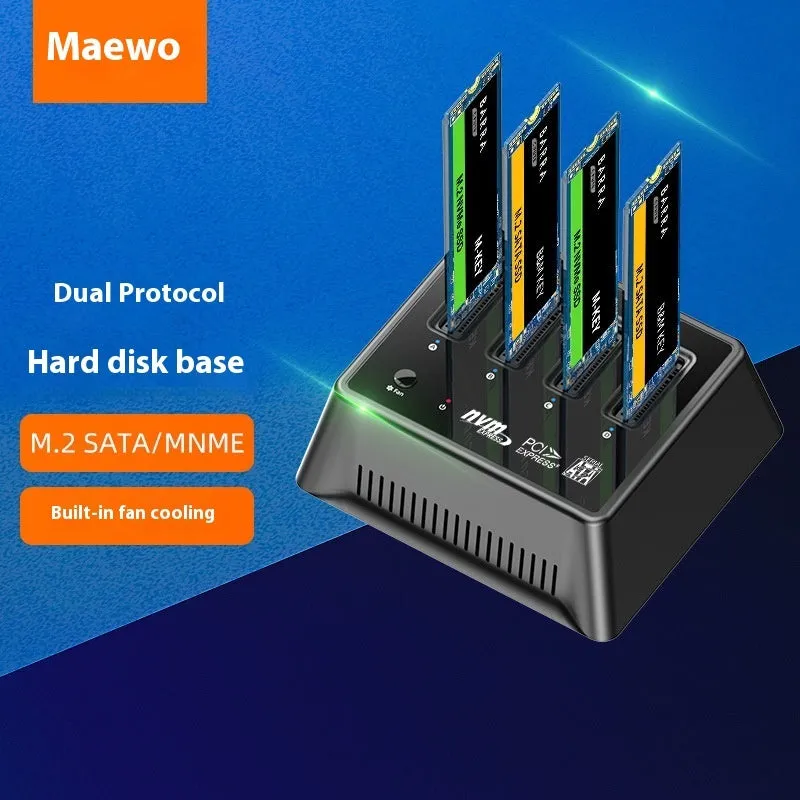
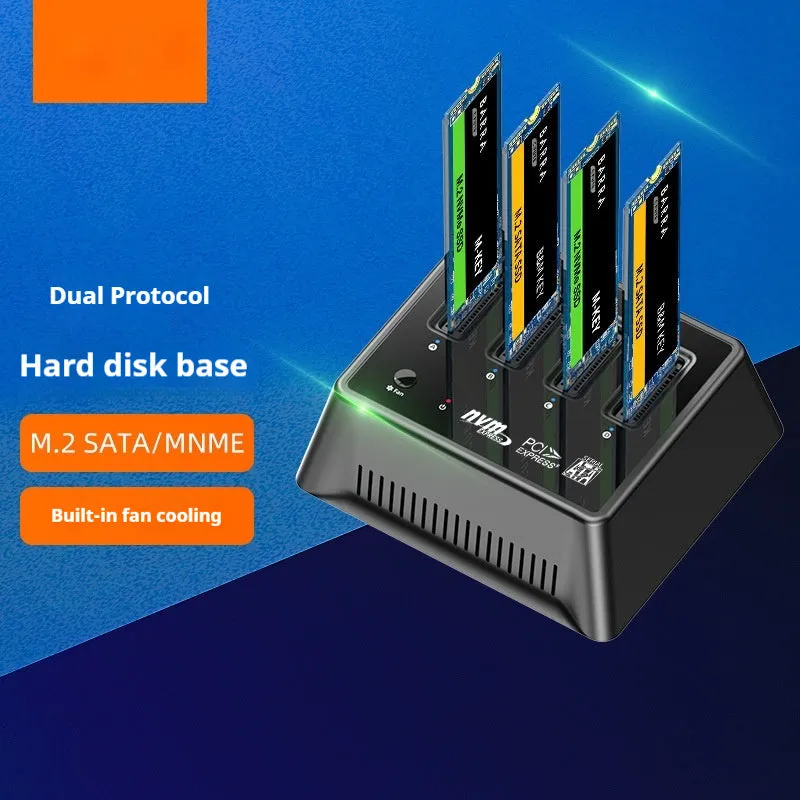
M2 NVMe and SATA dual protocol SSD solid state drive aluminium alloy heatsink enclosure, 90x78x34mm cooling module for M.2 SSD storage expansion, K30174P2 European standard colour finish, includes packaging box and manual


M2 NVMe and SATA dual protocol SSD solid state drive aluminium alloy heatsink enclosure, 90x78x34mm cooling module for M.2 SSD storage expansion, K30174P2 European standard colour finish, includes packaging box and manual
M2 Dual Protocol SSD Aluminium Alloy Heatsink Enclosure - 90x78x34mm Cooling Module for NVMe and SATA Drives

This aluminium alloy heatsink enclosure provides a dedicated cooling solution for M.2 solid state drives, addressing the thermal management needs that arise during sustained data transfer operations in modern computing environments. With dual protocol compatibility covering both NVMe and SATA interface standards, the module offers broad application across different SSD generations and performance categories. The 90x78x34mm dimensions create a compact yet effective passive cooling system that dissipates heat through aluminium's natural thermal conductivity without requiring additional power connections or moving components. This approach maintains SSD temperature regulation through simple physical principles while supporting various computer builds from standard desktops to space-constrained small-form-factor systems.
Features and Construction

The M2 dual protocol SSD enclosure combines material selection with precise manufacturing to create a functional cooling accessory. Its design centres on providing adequate thermal mass and surface area for heat dissipation while maintaining compatibility with standard M.2 SSD mounting arrangements. The enclosure's construction reflects practical considerations for component protection and temperature management rather than purely aesthetic design elements.
Material and Build
Manufactured from aluminium alloy using OEM processing methods, this heatsink enclosure utilises aluminium's thermal conductivity properties to transfer heat away from SSD controller chips and NAND flash memory modules. The K30174P2 European standard colour finish applied to external surfaces represents a specific industrial coating specification, though the source text does not provide details about its thermal or protective characteristics beyond identification. The enclosure's construction focuses on creating direct physical contact between the aluminium body and SSD components, establishing a thermal pathway that relies on material conductivity rather than complex engineering solutions.
Size and Practical Fit
With dimensions measuring 90mm in length, 78mm in width, and 34mm in height, the enclosure accommodates standard M.2 SSD form factors while providing sufficient aluminium mass for effective heat absorption. These measurements create a rectangular cooling module that fits within most desktop computer cases and many small-form-factor builds, though users should verify clearance in particularly constrained environments. The 34mm height dimension represents the complete module thickness including both the enclosure structure and any integrated mounting provisions, providing a reference point for case compatibility checks before installation.
Uses and Placement
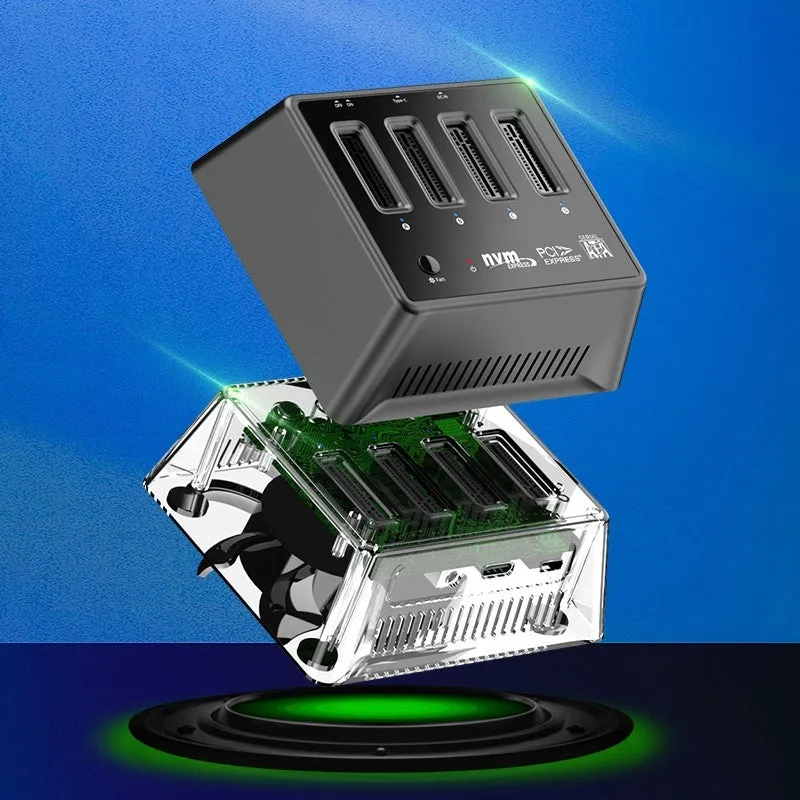
This dual protocol heatsink enclosure serves practical applications across different computing scenarios where M.2 SSD temperature management becomes relevant. Its compatibility with both NVMe and SATA interface standards expands potential use cases beyond specific SSD generations or performance tiers. The passive cooling approach makes it suitable for environments where fan noise reduction matters or where additional power connections present installation challenges.
Event or Professional Use
In professional computing environments where sustained data transfer operations occur regularly - such as video editing workstations, data analysis systems, or server applications - this aluminium enclosure helps manage thermal accumulation during extended read/write cycles. The dual protocol support allows deployment across different SSD specifications within the same organisation, simplifying procurement and maintenance processes. While the source text doesn't specify thermal performance metrics, the aluminium construction provides fundamental heat dissipation that can complement active cooling systems or serve as standalone thermal management in moderate-load scenarios.
Everyday Home Use
For general home computing, gaming systems, and personal productivity builds, this enclosure offers straightforward SSD temperature regulation without complex installation requirements. Its compatibility with both NVPe and SATA M.2 drives makes it suitable for various consumer SSD models purchased at different times or performance levels. The passive design eliminates fan maintenance concerns and contributes to quieter system operation, while the aluminium construction provides basic component protection alongside thermal management functions.
Benefits and Buying Value

The dual protocol SSD heatsink enclosure delivers practical advantages centred on compatibility, simplicity, and material-based thermal management. Its value proposition emerges from addressing specific technical requirements while maintaining installation accessibility for users with different experience levels. The product's benefits reflect measured responses to identifiable SSD cooling needs rather than exaggerated performance claims.
Reuse and Low Maintenance
Aluminium's durable material properties support potential reuse across multiple SSD upgrade cycles, provided physical compatibility persists with future M.2 form factors. The passive cooling design requires no ongoing maintenance beyond occasional dust removal, contrasting with active cooling solutions that may need fan replacements or bearing lubrication over time. The dual protocol compatibility extends the enclosure's useful lifespan by supporting both current NVMe standards and older SATA M.2 drives, allowing migration between different SSD types without requiring separate cooling solutions.
Why Choose This Product
This aluminium heatsink enclosure presents a straightforward solution for users seeking basic thermal management for their M.2 SSDs without investing in complex cooling systems. The dual protocol compatibility eliminates the need to verify specific interface standards before purchase, reducing research requirements for consumers upgrading existing systems or building new computers with mixed SSD generations. The defined 90x78x34mm dimensions provide concrete sizing information for compatibility verification, while the aluminium construction offers predictable thermal performance based on material properties rather than unverified engineering claims.