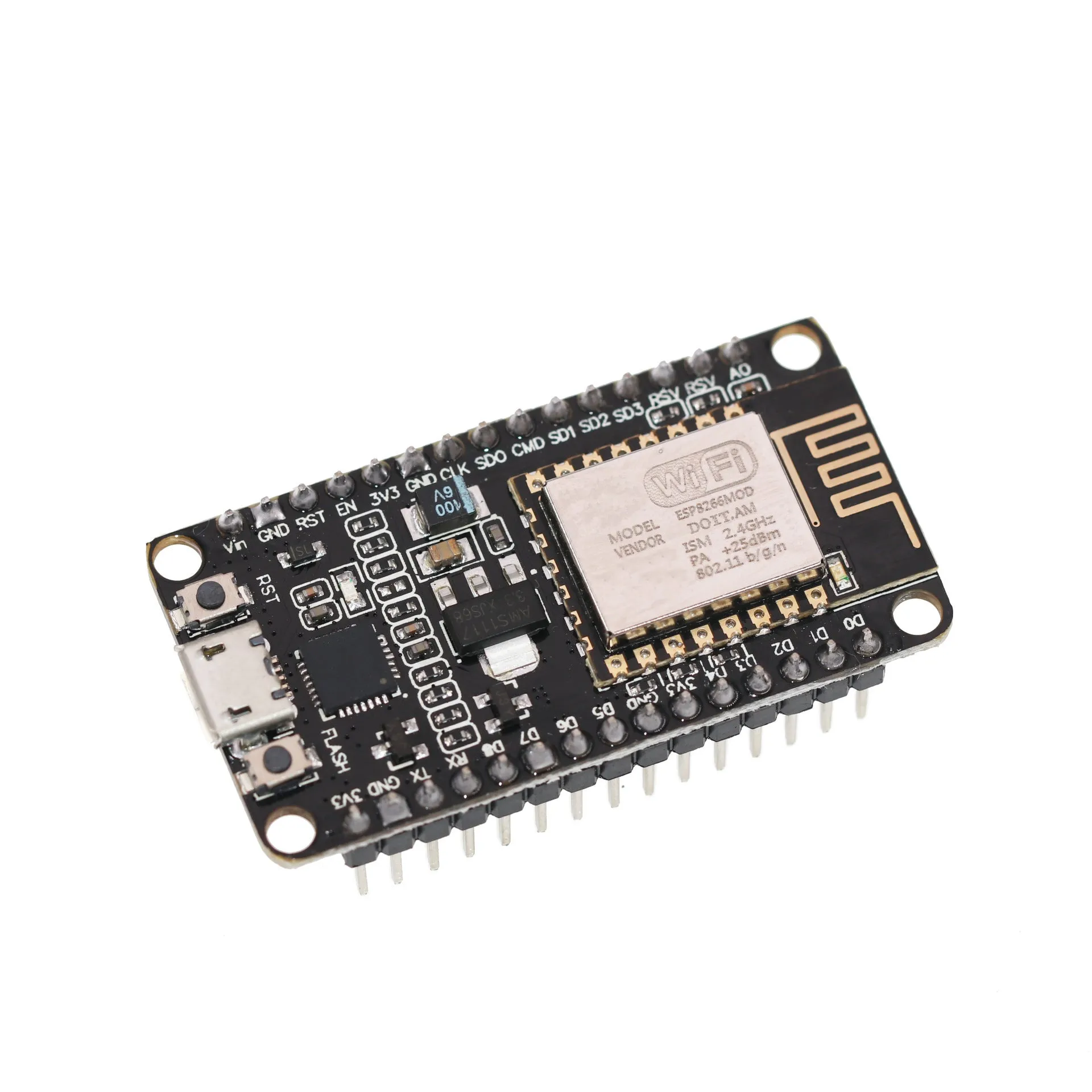
NodeMcu Lua WiFi Development Board ESP8266 with CH340G USB Interface, Open-Source Programmable IoT Module for Arduino-Style Hardware IO and Event-Driven Network Applications in a Compact 5mm x 5mm MCU Format


NodeMcu Lua WiFi Development Board ESP8266 with CH340G USB Interface, Open-Source Programmable IoT Module for Arduino-Style Hardware IO and Event-Driven Network Applications in a Compact 5mm x 5mm MCU Format
NodeMcu Lua WiFi Development Board: Open-Source ESP8266 Module with CH340G Interface

This NodeMcu development board presents a streamlined entry point for creating connected devices and Internet of Things (IoT) prototypes. By combining the widely-supported ESP8266 wireless microcontroller with a simplified programming workflow, it reduces the initial complexity often associated with embedded systems development. The board is designed to be low-cost and accessible, offering an open-source platform where users can write code interactively using the Lua scripting language. This approach facilitates rapid testing and iteration, which can significantly accelerate the development cycle for WiFi-enabled applications, from simple sensor loggers to more complex network devices.
Features and Construction
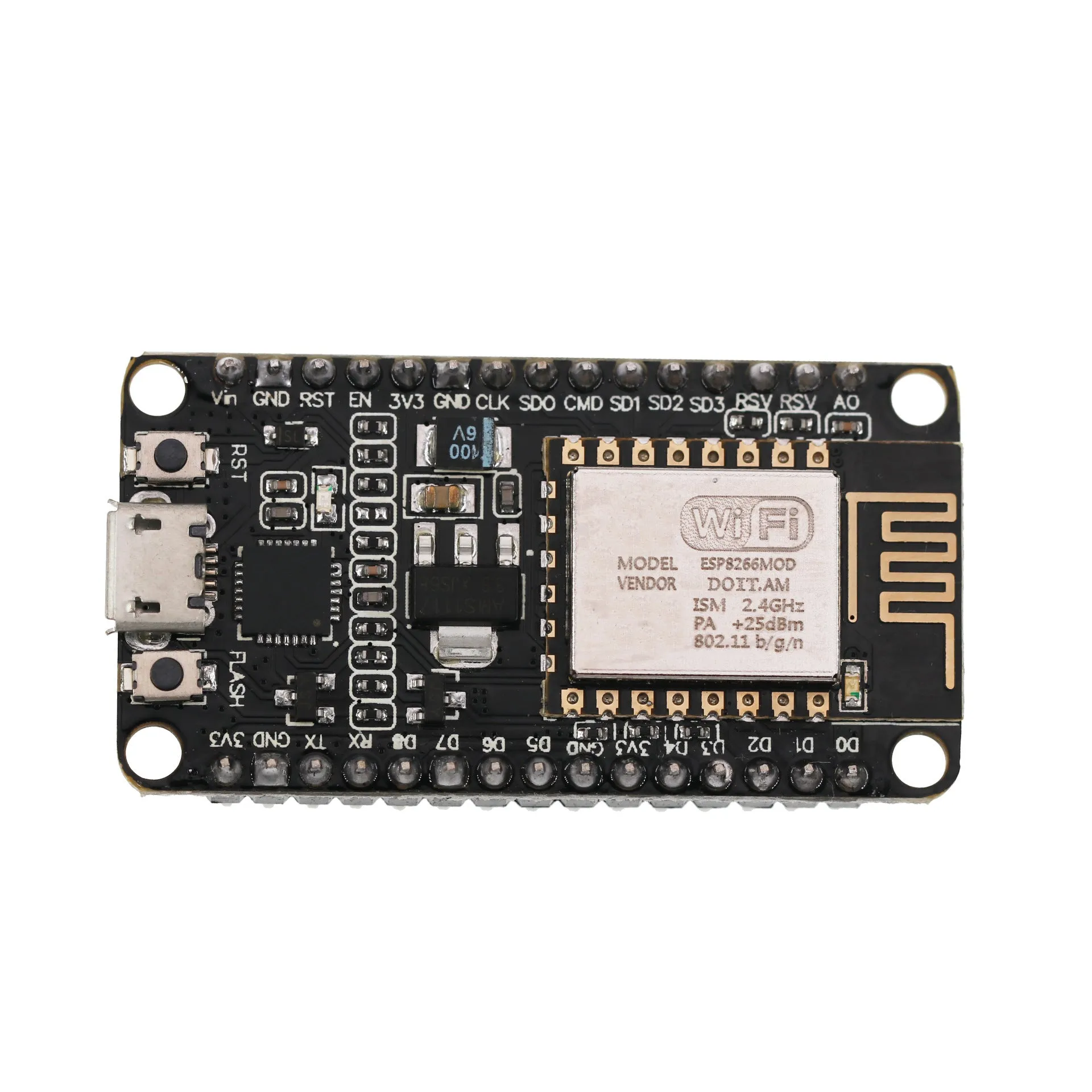
The board's core functionality is built upon specific hardware and software choices intended to simplify the developer experience. Its construction focuses on providing the necessary interfaces for both programming and physical world interaction while maintaining a compact and cost-effective form factor.
Material and Build
The primary processing component is the ESP8266 microcontroller, which integrates a Tensilica L106 32-bit processor and full WiFi stack. For reliable communication with a host computer, the board incorporates a CH340G USB-to-serial converter chip. This component handles the translation of USB signals to the UART serial protocol used by the ESP8266, enabling straightforward programming and serial communication without requiring specialised hardware drivers on most modern operating systems. The board is constructed on a standard printed circuit board (PCB) that hosts these ICs, the necessary voltage regulation, and the accessible input/output pins.
Size and Practical Fit
A key physical specification of the onboard ESP8266 module is its compact 5mm x 5mm size. This small footprint contributes to the overall manageable dimensions of the development board, making it suitable for integration into space-constrained projects or for use as a prototyping platform before designing a custom PCB. The board's layout provides clear access to its General Purpose Input/Output (GPIO) pins, which are arranged in a pattern familiar to users of Arduino and similar microcontroller boards, ensuring compatibility with a vast ecosystem of shields, sensors, and breakout boards.
Uses and Placement

This development board is versatile, supporting applications from educational experiments to functional prototypes. Its design philosophy centres on lowering the barrier to entry for WiFi-enabled project development.
Event or Professional Use
For professional prototyping, IoT product development, or advanced hobbyist projects, the board's event-driven network API offers a powerful paradigm. Modelled on a Node.js style, this API allows developers to write network application code that responds to events like incoming HTTP requests or data packets, which can streamline the creation of web servers, MQTT clients, or other networked services. This architecture, running on the modest 5mm x 5mm MCU, facilitates the development of sophisticated applications without requiring deep expertise in low-level network programming, thereby speeding up the development process.
Everyday Home Use
For home automation enthusiasts, students, or makers, the board serves as an ideal platform for creating smart home devices. Its Arduino-like hardware IO means existing knowledge and code for controlling LEDs, reading button presses, or collecting data from temperature sensors can be readily applied. The interactive Lua scripting environment enhances this experience by allowing code to be written and tested in real-time without the compile-and-upload cycle, making iterative testing and debugging more intuitive for beginners and experienced developers alike.
Benefits and Buying Value

The value of this development board lies in its integrated approach to simplifying the IoT development workflow, balancing capability with accessibility.
Reuse and Low Maintenance
The board promotes reuse through its standardised interfaces. The GPIO pins allow the same core board to be repurposed for countless different projects by simply connecting different peripheral components. The software environment is open-source, ensuring long-term community support and a wealth of shared libraries and examples. From a maintenance perspective, the use of the robust CH340G interface chip contributes to reliable serial communication, and the interactive Lua environment reduces software-related friction during development.
Why Choose This Product
Choosing this NodeMcu board is a decision for those seeking a practical balance between functionality and developer convenience. It directly addresses common hurdles in microcontroller work: the CH340G interface simplifies connectivity compared to some older chips; the interactive Lua scripting removes the delay of the traditional compile-upload cycle; and the pre-integrated WiFi and network APIs eliminate the need to source and program a separate wireless module. It consolidates these features into a single, ready-to-use board that is both a capable tool for experienced developers and a gentle introduction for those new to IoT.