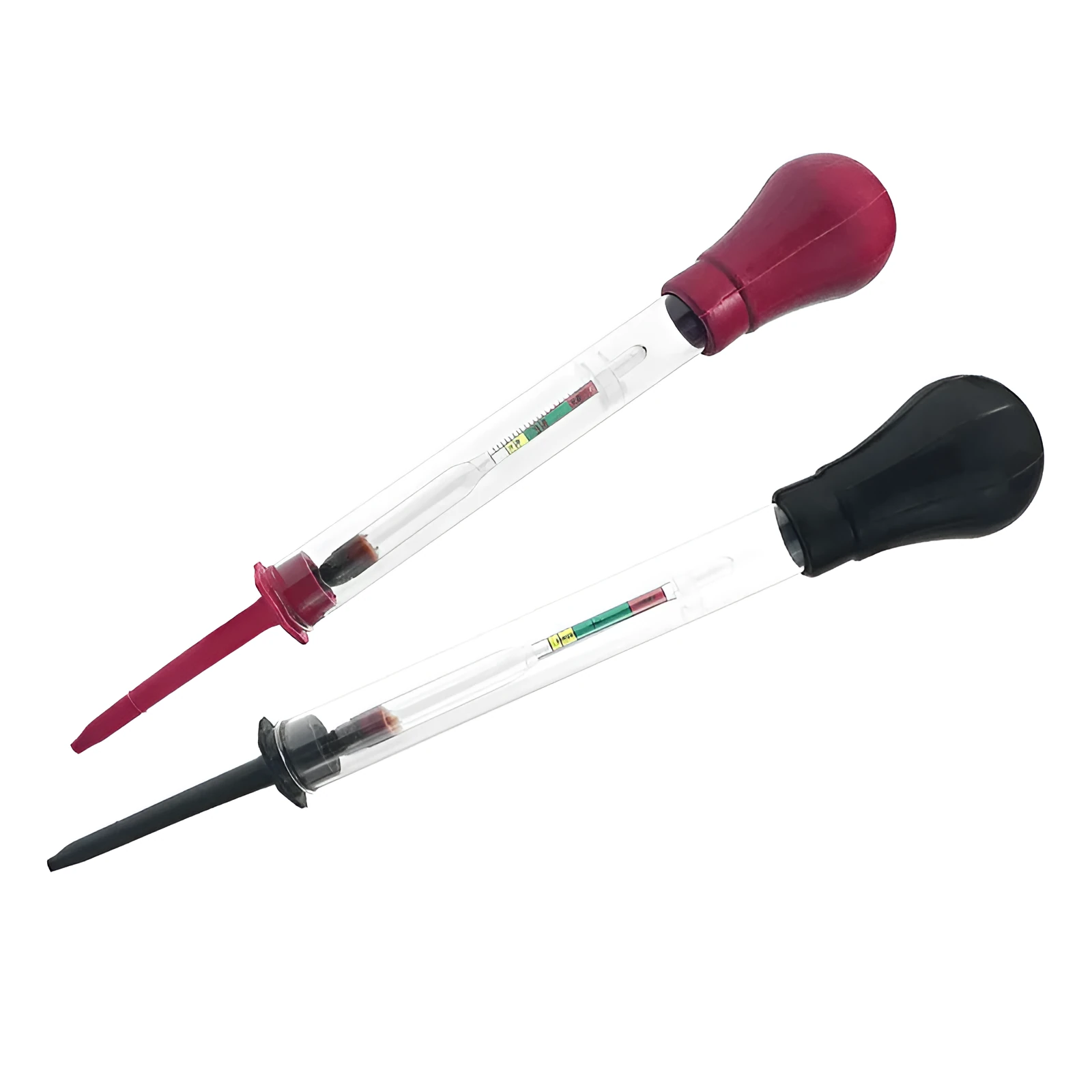
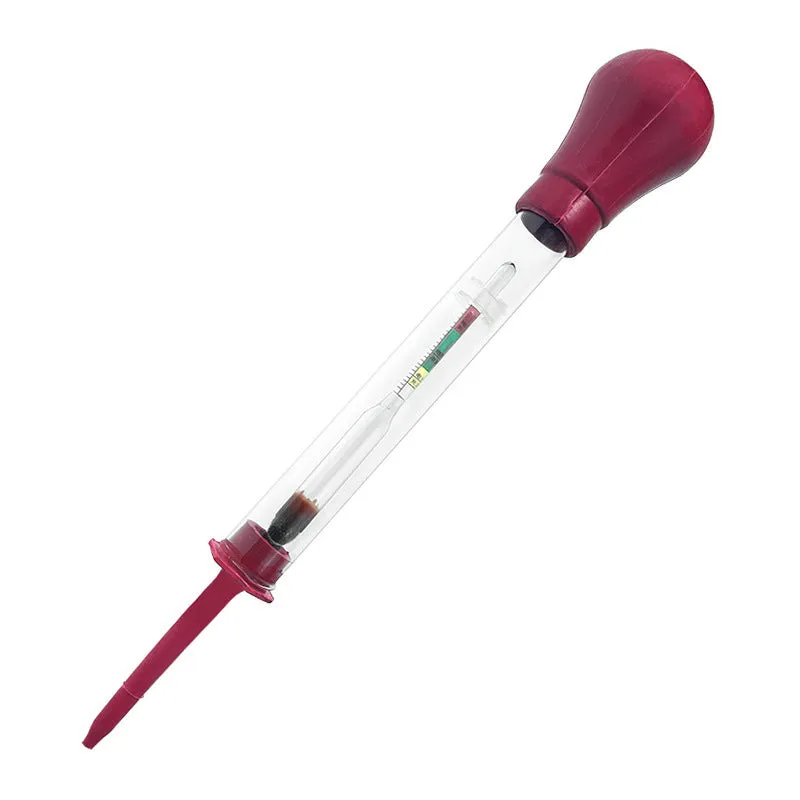
Suction-type electrohydraulic hydrometer for automobile battery and electrolyte density testing, glass construction with 0.01 accuracy measurement range 1.1-1.3, includes red and black units, 330mm length


Suction-type electrohydraulic hydrometer for automobile battery and electrolyte density testing, glass construction with 0.01 accuracy measurement range 1.1-1.3, includes red and black units, 330mm length
Suction-type electrohydraulic hydrometer for precise automobile battery electrolyte density measurement

This glass electrohydraulic hydrometer provides accurate measurement of electrolyte density in automobile batteries, helping users monitor battery health and charge state through fluid concentration analysis. With a measurement range of 1.1 to 1.3 and accuracy of 0.01, this suction-type instrument allows for straightforward sampling from battery cells. The 330mm length provides sufficient reach for accessing battery compartments while maintaining measurement precision. The set includes both red and black units, offering flexibility for multiple testing scenarios or visual distinction between measurements.
Features and Construction
This hydrometer combines practical functionality with straightforward operation for battery maintenance testing. The instrument's design prioritises accurate electrolyte density measurement while maintaining usability for both professional and home automotive applications.
Material and Build
The hydrometer is constructed entirely from glass, providing transparency for clear reading of measurement levels and resistance to chemical interaction with battery electrolytes. The suction mechanism enables users to draw electrolyte samples directly from battery cells without requiring additional equipment. This design minimises spillage and ensures consistent sample collection for accurate density readings.
Size and Practical Fit
With a length of 330mm, the hydrometer offers sufficient reach to access most automobile battery compartments while maintaining manageable handling characteristics. The measurement scale from 1.1 to 1.3 covers the typical density range of battery electrolytes, allowing users to assess battery charge state effectively. The 0.01 measurement accuracy provides detailed insight into electrolyte concentration changes that may indicate battery condition.
Uses and Placement
This hydrometer serves specific testing functions within automotive maintenance and battery management applications. Its design addresses practical needs for electrolyte density measurement across various battery testing scenarios.
Event or Professional Use
Automotive workshops and battery service centres can utilise this hydrometer for routine battery testing and maintenance diagnostics. The inclusion of both red and black units allows technicians to maintain separate instruments for different testing scenarios or to have backup units available. The suction-type operation facilitates efficient testing workflow when handling multiple batteries in professional settings.
Everyday Home Use
Home mechanics and automotive enthusiasts can employ this hydrometer for regular battery maintenance checks to monitor electrolyte levels and battery health. The straightforward suction mechanism requires minimal technical expertise while providing valuable data about battery condition. The glass construction allows for clear visual reading of density levels without specialised interpretation equipment.
Benefits and Buying Value

This hydrometer offers practical advantages for battery testing through its specific design features and measurement capabilities. The instrument provides concrete functionality for users requiring electrolyte density data.
Reuse and Low Maintenance
The glass construction facilitates easy cleaning between uses, helping maintain measurement accuracy over multiple testing sessions. The inclusion of both red and black units extends the usable life of the set by providing backup options. The suction mechanism's simple operation reduces the need for additional sampling equipment or complex procedures.
Why Choose This Product
This electrohydraulic hydrometer offers specific measurement capabilities for automobile battery testing with documented accuracy and range specifications. The 0.01 accuracy provides meaningful data for assessing electrolyte concentration changes, while the suction-type design simplifies the sampling process. The inclusion of both colour variants in a single set adds practical utility for different testing scenarios or measurement tracking.